Sir Peter Blake

The Dazzle Alphabet
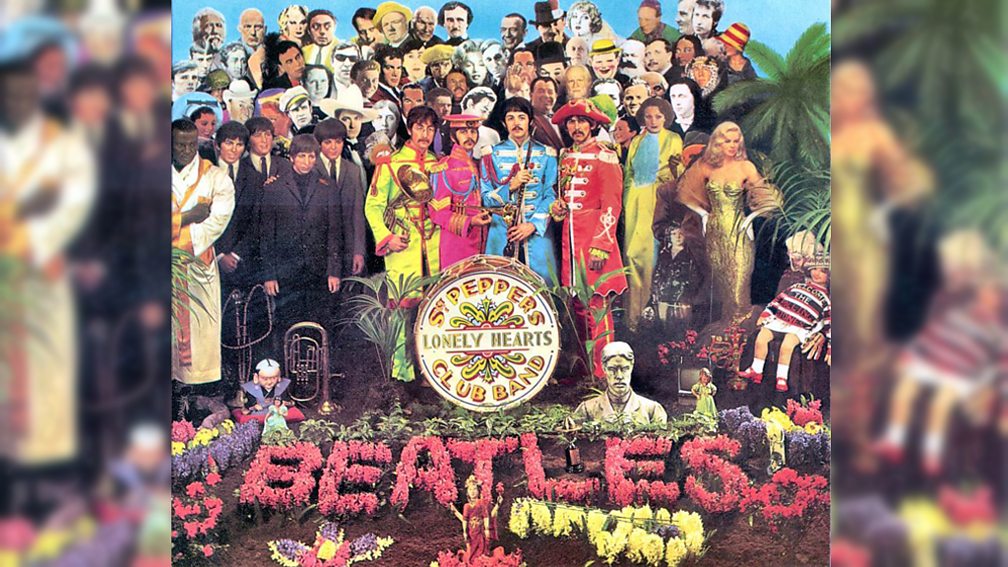
One of the best known British Pop artists, Peter Blake was born in 1932. Perhaps most well known for designing the album cover of St Pepper's lonely Heart's Club Band for the Beetles, he also created two of The Who's album covers and Stop The Clocks for Oasis.

Blake attended Maypole school Bexley and Dartford West Central. He lived in a house on Princes Road and then in 1937 a newly built semidetached house at 9 Marcus Road costing £600 at the time! He remembers the town park and library and recalls his family were involved in the Congregation Church. Blake describes Dartford being 'run by the Co-op' and a 'Co-op town'. At the age of 7 he was evacuated to Essex and later to Worcester. At the age of 14 he got a place at Gravesend Technical College as unlike his siblings he did not pass the 11+.  Blake recalls from this age visiting the jazz club opposite the railway and the Railway Tavern.

He describes his experiences of Dartford in an audio recording of The British Library,

Comments

Popular posts from this blog

The History of Bluewater

Bluewater is an out of town shopping centre located in Greenhithe just outside of Dartford.  In May 1996 building of the Shopping Centre began at the site of a former chalk quarry.  Tunnels were excavated under Bean Road to join the Eastern and Western Quarries allowing sand to be transported to the site.  Its  lakes were partially drained in preparation for construction of the basement levels and the cliffs were remodelled to permit vehicular access to the site.  It is  built across 20 hectares of lakes and parkland.   Bluewater opened on 16th March 1999. The layout is a triangular design with a flagship store at each corner; Marks&Spencer, John Lewis and House of Fraser.  This layout is considered easier for navigation.  To reflect the surrounding lakes swathes of glass are incorporated into the architecture.  The ventilation system is based on the traditional oast house with fresh air brought through rotating aluminium vents on th...

Goodbye Littlebrook Power Station

Electricity was historically generated at Littlebrook since 1939 when the first Power Station at the site was constructed. Littlebrook 'A' and B were coal powered. Although C was at first coal powered it was later converted to burn oil fuel from 1958. Littlebrook ‘D’ began generating electricity in 1981, and was the fourth power station to be built at the location. After storm force winds in October 1987 Littlebrook D had a significant role in restoring power to the South East of England due to its back-start capabilities i.e. it did not require an external source of power. Littlebrook Power Station closed in 2015 as it was believed unprofitable to bring it up to necessary environmental standards and subsequently demolished by explosion on Friday 30 August 2019. Source: Wikipedia- Littlebrook Power Station Powerstations UK

Dartford Creek Barrier - Will Dartford Flood Again?

Dartford Creek is one of the last remaining natural tidal creeks in London. It was built in 1981 to minimise flood risk from the Thames Estuary to Crayford and Dartford. There are two gates that travel vertically and are driven by a chain system. The gates are balanced by two water-filled counterweights. When they close, the barrier is able to withstand up to 7 metres of water above average sea level. Most of the time the gates are raised but when flooding is predicted by the Met Office both are closed. Raised embankments along the lower reaches of the Thames estuary also act as flood defences. Before the barrier was built Dartford flooded significantly  in 1953 and 1968. In the face of global warming should we be worried about Dartford flooding once more?  There is certainly a lot of new housing on floodplain and reclaimed marshland.  Take a look at this map and judge for yourself.  It shows the land projected to be below annual flood level in 2030.   Clim...